Tuesday, November 5, 2013

Urine leak in elderly men and women

Urine leak in elderly
Urine leak afflicts unto 30% of older people living at home. It is associated with embarrassment, stigmatization, isolation, depression, anxiety and risk of institutionalization. It predisposes to perineal rashes, ulcers, urinary tract infections, urosepsis falls and fracture. Also the cost of management of geriatric incontinence is high. Despite these considerations geriatric incontinence remains neglected by patients and physicians alike or dismiss it as a normal part of growing old. But it is abnormal at any age. More ever its increased prevalence relates more to age associated diseases and functional impairment than to age itself.

Regardless, incontinence is usually treatable and often curable at all ages even in frail elderly but the approach differs significantly from that used in younger patients.

Pathophysiology

At any age, continence depends on integrity of lower urinary tract and presence of adequate mentation, mobility, motivation and manual dexterity. lower urinary tract changes with age even in the absence of disease. Bladder controllability, sensation and ability to postpone voiding decline in both male and female. 

However there are more changes in female urethra w.r.t sphincter, pelvic muscles and length of urethra.

Involuntary bladder contraction increases in both sexes and elderly often excrete most of the fluid intake at night.


There may be associated prostate enlargement and obstruction of outflow due to prostate, renal disease, heart failure etc. The above changes predispose to urine leak.
In most of the cases the onset or exacerbation of urine leak is probably due to precipitants outside lower urinary tract that are amenable to medical treatment and treatment of these precipitants alone may be sufficient to restore incontinence.

Transient urine leak

Incontinence is transient in upto one third of elderly and more than half of hospitalized patients. Although termed incontinence it may persist if left untreated.
Urinary tract infections(UTI) are commonest cause of transient urine leak when urgency and burning sensation are so prominent that the older person is unable to reach the toilet before voiding. Incontinence is occasionally the only symptom of UTI and traetment of UTI resolves the incontinence.
Atrophic urethritis and vaginitis causes incontinence and urine leak in upto 80% of elderly women with incontinence. It is associated with urgency and occasionally sense of scalding that mimics a UTI and also exacerbates stress incontinence. Recognizing atrophic vaginitis is important as it may respond to low dose estrogen. This also prevents recurrent UTI's. 
Stool impaction (chronic constipation) may cause both fecal and urinary incontinence in 10% of older individuals. Disimpaction and healthy bowel habits restores continence.

In addition many drugs are associated with urinary incontinence. Excess urine production due to diuretics, caffinated beverages, diabetes and congestive heart failure may lead to incontinence , treatment of which corrects incontinence.

Incontinence due to lower urinary tract abnormality

Bladder(detrusor) over activity is the most common type of lower urinary tract dysfunction in a incontinent male or female elderly. It occurs due to increased spontaneous activity of bladder muscles. Over activity may be due to central nervous system abnormality or due to bladder abnormality. Anticholinergics, injection therapy helps in most of the cases.

Incontinence in the setting of outlet obstruction is second most common cause of incontinence in older men.
It may be due to urgency or overflow and treatment of enlarged prostate  relieves the symptoms.

In older women urethral stenosis due to fibrotic changes and atrophy may lead to incontinence. resolves by use of low dose estrogen cream and dilatation.

Stress incontinence is second most common cause of incontinence in women. Occurs due to birth and operative trauma and also due to age related atrophy. stress incontinence can be cured by sling surgery, pelvic exercises injection therapy etc.

Evaluation of urine leak involves identification of contributing factors lab testing for kidney functions. Urodynamics is strongly considered in certain group of patients with bladder weakness and over activity.
Successful treatment of urine leak in elderly is usually feasible.
Treatment of contributing factors such as medications and systemic problems can improve the incontinence.
Incontinence due to obstruction is treatable by removal of obstruction such as prostate surgery.
Multifactorial creative, persistent and optimistic approach increases chances of successful outcome.     


Monday, November 4, 2013

LARGE BLADDER CLOT EVACUATED ENDOSCOPICALLY BY MORCELLATOR

A 79 y gentleman underwent spine surgery and was put on LMW Heparin for DVT prophylaxis. On the post operative day 3, his PUC was removed and he went into retention. Foley's reattempted but failed leading to bleeding per urethra.
Urologist opinion was then sought.PUC was attempted only once by Urologist but could not succeed. Patient  was counselled for SPC and risk of hematuria due to concomitant use of LMW Heparin therapy. Trocar SPC was done under LA at bedside and around 1 litre urine drained. Later he developed repeated SPC blockage due to clots which were flushed at regular intervals by bladder wash syringe.
 Later it was decided to shift the patient to our center from outside facility,for cystoscopy and clot evacuation. On cystoscopy there was a false passage in bulbar urethra and obstructive prostate with  huge  clot in the bladder. As the bladder was already tense, any use of Elliks evacuator will increase the chances of  bladder rupture. Hence the massive clot was removed by Morcellator completely under anaesthesiologist cover.

Sunday, October 20, 2013

PRONE POSITIONING OF A PATIENT WITH ANKYLOSING SPONDYLITIS FOR PCNL

Ankylosing spondylitis is a debilitating disease that causes fusion of vertebrae and sacroiliac joints with severe morbidity.
Performing surgery in such patients with restricted mobility and ventilatory difficulties is a challenging task.
One such patient underwent PCNL at our hospital for a partial staghorn kidney stone under spinal anaesthesia (which is sometimes very difficult due to fused vertebrae and ossification with loss of curvature). One may also observe the lack of side movement of the head due to fused cervical vertebrae.The procedure was uneventfully performed by our urology team and patient was discharged safely.

Saturday, October 19, 2013

EMERGENCIES ALL SHOULD KNOW:ANAEMIA (SEVERE PALLOR)

SEVERE PALLOR
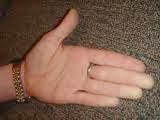
Pallor is a pale color of the skin which can be caused by illness, emotional shock or stress, stimulant use, or anaemia, and is the result of a reduced amount of oxy hemoglobin in skin or mucous membrane.Pallor is more evident on the face ,palms,conjunctiva,tongue etc.. It can develop suddenly or gradually, depending on the cause. It is not usually clinically significant unless it is accompanied by a general pallor pale lips,tongue,palms,mouth etc.
Common causes:
  • anaemia, due to blood loss, poor nutrition, or underlying disease such as sickle cell anaemia 
  • shock, a medical emergency caused by illness or injury 
  • frost bite 
  • underlying cancer 
  • leukemia 
  • peripheral vascular disease 
  • emotional response, due to fear,embarassment ,grief etc. 
  • lead poisoning 
  • reaction to ethanol and/or other drugs such as cannabis, 
  • malaria 
  • hemolytic anemia 
  • congenital heart disease 
  • chronic renal disease 
  • iron/folate/B12 deficiency 
  • G6PD deficiency 
  • GI Bleeding 
  • worm infestations 
  • malnutrition 

Paleness, also known as pale complexion or pallor, is an unusual lightness of skin color when compared with your normal hue. Skin color is determined by several factors, such as the amount of blood flowing to the skin, skin thickness, and the amount of melanin in the skin. Paleness is caused by reduced blood flow or a decreased number of red blood cells. Paleness can be generalized (all over) or local.

Anemia, a condition in which the body doesn’t produce enough red blood cells, is one of the most common causes of paleness. Anaemia can be acute (sudden onset) or chronic (developing slowly).

Acute anemia is usually the result of rapid blood loss from trauma, surgery, bleeding stomach ulcers, or bleeding from the colon.Symptoms of acute onset anemia include:rapid heart rate, shortness of breath,high or low blood pressure,loss of consciousness,irregular or absent menstrual period (DUB) etc.

Chronic anemia is very common. It can be caused by not having enough iron, B12 or folate in your diet. There are also genetic causes of anemia such as sickle cell disease and thalassemia (a genetic disorder that destroys red blood cells). Anemia that develops more slowly can be caused by diseases such as chronic kidney failure or hypothyroidism (when the body does not produce enough thyroid hormone). Certain cancers that affect the bones or bone marrow can also cause anemia due to slow blood loss over a period of weeks to months.

Local paleness usually involves one limb. You should see your doctor if you have sudden onset of generalized paleness or paleness of a limb.Arterial blockage (poor or lack of blood circulation) can cause localized paleness, typically in arms or legs. The limb becomes painful and cold due to lack of circulation.Untreated arterial blockage of a limb can result in gangrene, which can result in the loss of a limb.
Paleness accompanied by signs of blood loss such as fainting, vomiting blood, bleeding from the rectum or abdominal pain is considered a medical emergency. Shortness of breath and sudden onset of paleness, pain and coldness of a limb are also serious symptoms that require immediate medical attention.Your doctor will also review your medical history and perform a physical examination to check your vital signs (heart rate and blood pressure). Pallor can often be diagnosed on sight, but can be hard to detect in people with dark complexions.

Investigations: 
CBC (complete blood count, evaluates if you have anemia),reticulocyte count (a blood test that shows if your bone marrow is replacing blood loss),stool test for the presence of blood,,thyroid function tests (low levels of thyroid hormone causes anemia),BUN and creatinine (kidney function tests),serum iron, B12, and folate levels (to see if nutritional deficiency is causing anemia)
Treatment
  • Balanced diet, and iron (oral/parenteral), B12 or folate supplements,vitamin supplements 
  • Erythropoietin to stimulate RBC production
  • Blood Transfusion may be necessary in some cases 
  • Anti-malarials,de-worming therapy, 
  • surgery is an option for certain causes of acute blood loss, such as trauma. Surgery may also be required for treatment of arterial blockage. 
The long-term consequences for non-treatment of pallor depend upon the underlying cause. Untreated anemia due to blood loss can be fatal. Severe nutritional anemia can lead to other long-term health issues recurrent infections,cardiac failure,.

.


The development of pallor can be acute and associated with a life-threatening illness, or it can be chronic and subtle, occasionally first noted by someone who sees the child less often than the parents. The onset of pallor can provoke anxiety for parents who are familiar with the descriptions of the presentation of leukemia in childhood. In some instances, only reassurance may be needed, as in the case of a light complexioned or fair-skinned, non-anemic child.

Clinically, pallor caused by anemia usually can be appreciated when the hemoglobin concentration is below 8 to 9 g/d.The concentration of hemoglobin in the blood can be lowered by three basic mechanisms:
  • Decreased erythrocyte production
  • Increased erythrocyte destruction
  • Blood loss
WHO's Hemoglobin thresholds used to define anemia(1 g/dL = 0.6206 mmol/L)
Age or gender groupHb threshold (g/dl)Hb threshold (mmol/l)
Children (0.5–5.0 yrs)
11.0
6.8
Children (5–12 yrs)
11.5
7.1
Teens (12–15 yrs)
12.0
7.4
Women, non-pregnant (>15yrs)
12.0
7.4
Women, pregnant
11.0
6.8
Men (>15yrs)
13.0
8.1

Friday, October 18, 2013

EMERGENCIES ALL SHOULD KNOW:ACUTE URINARY RETENTION

ACUTE URINARY RETENTION

 Acute retention causing complete anuria is a medical emergency, as the bladder is filled with urine and can stretch to enormous sizes and possibly tear if not dealt with in time. If the bladder distends more, it becomes painful. 

The increase in bladder pressure can also prevent urine from entering the ureters or even cause urine to pass back up the ureters and get into the kidneys, causing hydronephrosis,sometimes kidney failure, and sepsis. A person should go straight to an emergency department  as soon as possible if unable to urinate for a long time and having a  painfully full bladder.
The causes are
Central causes
  • Consumption of some drugs like amphetamine etc.,
  • patients suffering from mental retardation,multiple sclerosis,stroke,diabetic autonomic neuropathy, 

In the bladder
  • neurogenic bladder,spinal cord diseases,bladder neck contracture,etc.


In the prostate
  • Prostate enlargement either benign or malignant

  urethra
  • Congenital urethral valves
  •  pinhole meatus
  • Obstruction in the urethra, for example a stricture (usually caused either by injury or STD), 
  • obstruction in urethra due to a stone
Urinary retention often occurs without warning. It is basically the inability to pass urine. In some people, the disorder starts gradually but in others it may appear suddenly. Acute urinary retention is a medical emergency and requires prompt treatment. The pain can be excruciating when urine is not able to flow out. Moreover one can develop severe sweating,chest pain,high blood pressure.

In the longer term, obstruction of the urinary tract may cause:
  • Bladder stones
  • weakness of detrusor muscle of bladder (atonic bladder is an extreme form)
  • Hydronephrosis of one/both kidneys leading to renal dysfunction
  • Diverticula (formation of pouches) in the bladder wall (which can lead to urine stasis ,stones and infection)

In acute urinary retention, catheterisation or suprapubic cystostomy (SPC) relieves the retention. These catheters are  inserted by preferrably urologist/trained health care professionals under proper antibiotic cover.

 If the procedure is not done in a sterile fashion, it can introduce infection into the bladder. This can result in an infection of the entire urinary tract. Therefore, sterile technique is a must when inserting a foley catheter. Careful washing of hands, meatus, and reusable catheters are also necessary with clean self catheterization techniques.
In the longer term, treatment depends on the cause.

 BPH may respond to Alpha blocker therapy/laser prostate.
 Some people with BPH are treated with medications like finasteride or dutasteride to decrease prostate enlargement. The drugs only work for mild cases of BPH but also have mild side effects. Some of the medications decrease libido and may cause giddiness,/ fatigue.. 
Older patients with ongoing problems may require continued intermittent self catheterisation in case of neurogenic bladder.

When you urinate, the brain signals the bladder muscle to tighten, squeezing urine out of the bladder. At the same time, the brain signals the sphincter muscles to relax. As these muscles relax, urine exits the bladder through the urethra. When all the signals occur in the correct order, normal urination occurs.In case of detrusor-sphincter-dyssynergia (DSD) is a condition where some brain/spinal cord diseases contribute to retention of urine.

Urinary retention is a common disorder in elderly males. The most common cause of urinary retention is BPH. This disorder starts around age 50 and symptoms may appear after 10–15 years. BPH is a progressive disorder and narrows the neck of the bladder leading to urinary retention. By the age of 70, almost 10 percent of males have some degree of BPH and 33% have it by the eighth decade of life. While BPH rarely causes sudden urinary retention, the condition can become acute in the presence of certain medications like anti-parkinsonism drugs,anti-psychotics, etc.
In young males, one of the the most common causes of urinary retention is acute infection of the prostate and  the infection is acquired during sexual intercourse.The other common cause is urethral stricture which will be treated succesfully by Optical urethrotomy where the urologist will  incise the stricture under anaesthesia cover.
A woman may experience urinary retention if her bladder sags or moves out of the normal position, a condition called cystocele.The abnormal position of the bladder may cause urine to remain trapped.Cystocele and rectocele are often the results of a dropping of the pelvic support floor for the bladder as seen in mulltiparae,elderly women etc.These are successfully treated by a dedicated urology team.